The Framework
The Darrymoore Agile Leadership Model
A practical leadership framework for modern organizations designed to help leaders close the execution gap and build organizations that thrive in complexity.
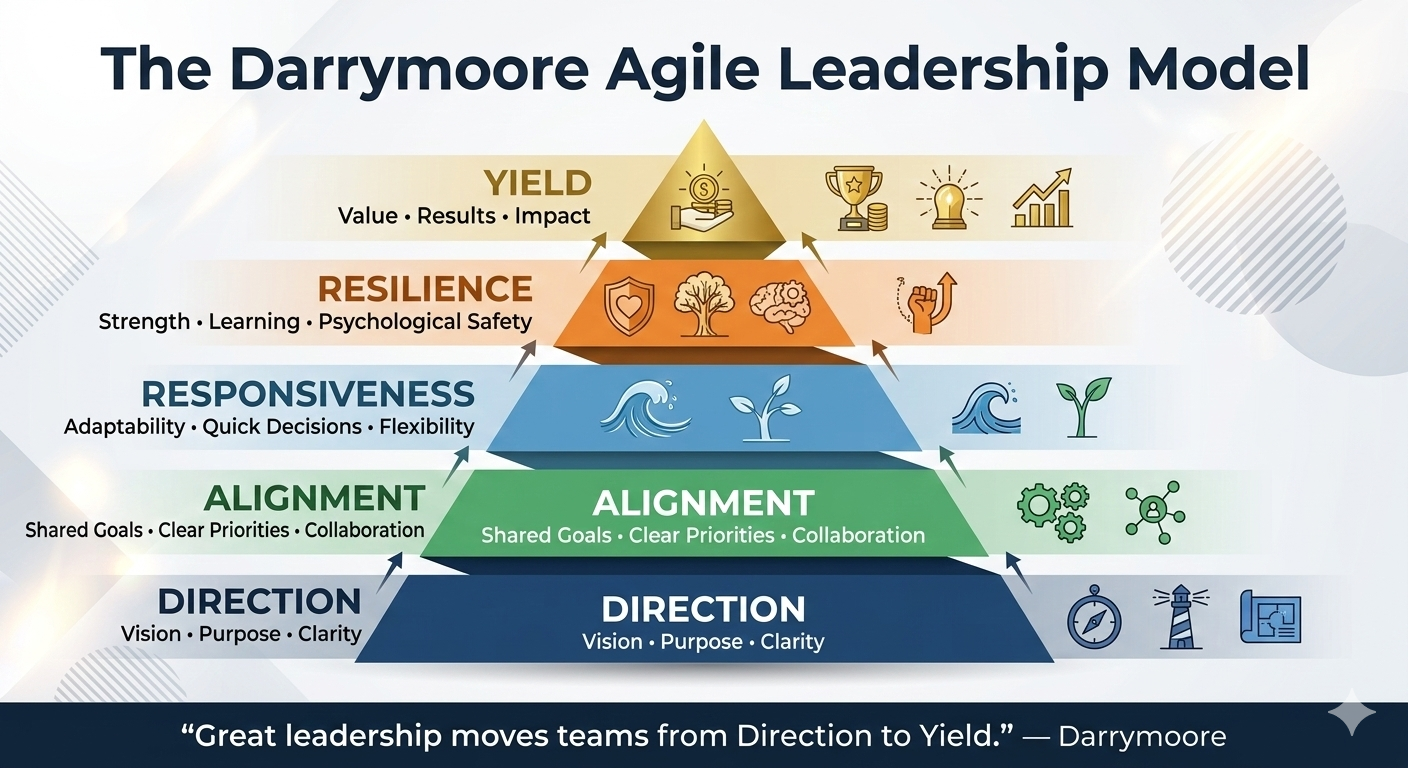
Direction • Alignment • Responsiveness • Resilience • Yield
The Five Interconnected Pillars
The model is built around five interconnected pillars that work together to create sustainable leadership effectiveness.
Direction
Clear vision and priorities
Creating clarity before control. Effective leaders establish a compelling vision that guides decision-making at every level of the organization.
Alignment
Shared purpose and coordinated action
Ensuring people, priorities, and purpose move together. When teams are aligned, they execute with precision and adapt without losing focus.
Responsiveness
Rapid adaptation to changing realities
Adapting quickly to change and uncertainty. Agile organizations thrive because they sense and respond faster than their competition.
Resilience
Strength under pressure and uncertainty
Building teams that perform under pressure. Resilient organizations maintain performance during disruption and emerge stronger.
Yield
Measurable outcomes and sustainable performance
Focusing on measurable outcomes and sustainable results. Leadership success is ultimately measured by the value created.
Why Organizations Need This Model
Organizations that master these pillars position themselves for long-term success. The model addresses the root causes of organizational underperformance:
- Execution gaps between strategy and results
- Poor alignment across teams and departments
- Leadership bottlenecks that slow decision-making
- Inability to adapt to market changes
- Inconsistent performance under pressure
“Organizations often struggle not because of a lack of talent but because of leadership gaps, poor alignment, and ineffective execution.”
— Gideon Oluseyi Daramola
Learn the Complete Framework
Dive deeper into The Darrymoore Model with the comprehensive guide that shows you how to apply these principles in your organization.
Get the Book